


India has always relied heavily on agriculture, which provides a livelihood to more than half the nation's population. While rainfall meets seasonal agricultural needs, farming largely depends on groundwater. The depletion of groundwater across the country has created immense hardship for farmers, with numerous districts facing severe water scarcity. As a result, crop yields and farmers' incomes have declined. Poor rainwater infiltration has not only depleted groundwater but also caused widespread waterlogging, leading to significant crop spoilage.
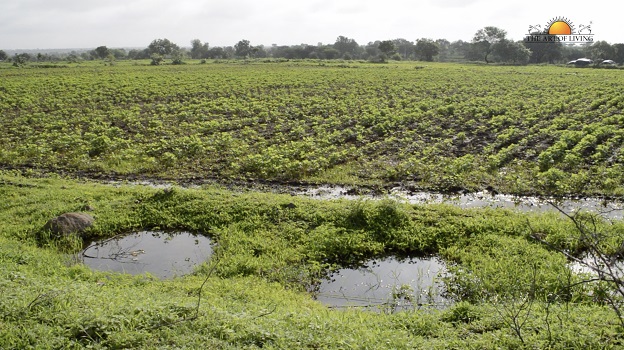
While interacting with farmers in Maharashtra, we found that many villages were grappling with waterlogging and falling groundwater levels. Over time, the situation worsened, reducing crop production and making it increasingly difficult for farmers to make ends meet. It became evident that a sustainable solution was needed - one that would enable rainwater to percolate underground while ensuring adequate water availability throughout the year.
Inspired by Gurudev Sri Sri Ravi Shankar's vision of improving the economic, physical, and mental well-being of rural communities, The Art of Living launched JalTara - a mission to address the groundwater crisis in rural India.
In its first phase, JalTara has positively impacted several water-stressed regions where farming had become increasingly difficult. The project offers a simple, technically sound, and effective solution to India's water crisis.
JalTara: Addressing Water Scarcity
JalTara is based on the construction of one recharge structure per acre of arable land. These structures are built at the lowest point of each farm and filled with rocks and pebbles, allowing rainwater to percolate into underground aquifers. Trees are also planted to reduce soil erosion, improve topsoil quality, and support long-term agricultural productivity.
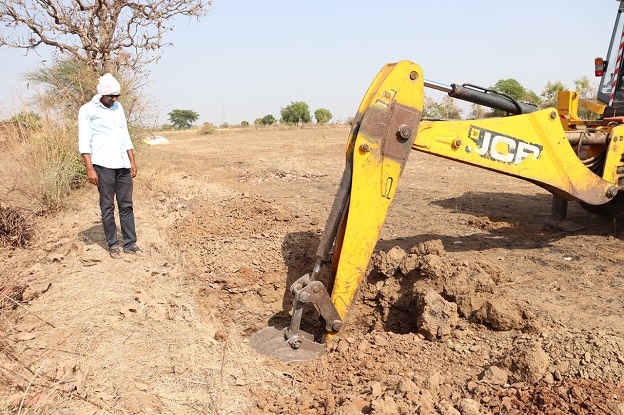
Throughout the implementation process, our teams regularly surveyed the land to ensure that every farmer's needs were addressed. As groundwater levels improved, village wells were naturally recharged, making drinking water more readily available.
The results have been both encouraging and inspiring. The smiles on the faces of farmers today are a testament to the project's impact and motivate us to continue working towards a water-secure future.
The numbers speak for themselves. So far, the project has reached 37 villages, with 19,000 recharge structures constructed, 40,000 trees planted, and 75,000 acres of land benefiting.
- Average increase in groundwater level: 14 ft
- Average increase in farmers' income: 120%
- Average increase in crop yield: 42%
- Reduction in crop spoilage due to waterlogging: 100%
- Average increase in year-round work availability: 88%
- Average increase in land usage during the Rabi season: 58%
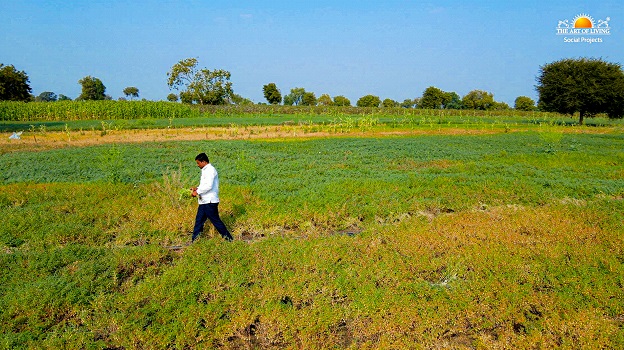
The Art of Living JalTara has benefited the majority of rural communities it has reached, improving livelihoods and bringing renewed hope.
Farmers Share Their Experiences
"When I came to know about the benefits of JalTara, I decided to implement it on my farm. It has prevented waterlogging and preserved groundwater for a longer time."
– Krishna Takle, Farmer, Pokhari Village
"Before JalTara Yojna, no effort was made to conserve water. After the implementation of JalTara Yojna, we have plenty of water in our hand pumps."
– Suman Bai, Farmer, Murumkheda Village
"I had six acres of land, of which only one acre produced crops. Previously, there was mud after rains. After the construction of JalTara pits, the water level in my well has risen. I can grow more crops now."
– Appasaheb Bahekar, Farmer, Jalna District
"JalTara's technique benefited us. We didn't have to spend anything to implement the JalTara technique on our farm and reaped immediate benefits after pits were constructed next to our wells, as the water levels doubled."
– Vikas Hamre, Farmer, Warud Village
"Earlier, there was too much mud on the farm. Excess water was absorbed after constructing JalTara pits. Water levels in my wells have increased. Soybean and chana production has improved."
– Sulabai Chavhal, Farmer, Murumkheda Village
JalTara continues to deliver positive results wherever it has been implemented. The approach is not only highly effective but also scalable, offering a practical solution for addressing water scarcity across India's drought-prone regions.
The project aims to reach 100,000 villages, build 5 crore recharge structures, and recharge 15 trillion litres of water annually across India within the next five years.
True to its name, JalTara is helping transform the lives of farmers by providing a practical and sustainable solution to India's water crisis, paving the way for greater prosperity and resilience in rural communities.